
The Shallows
What the Internet Is Doing to Our Brains, A Review

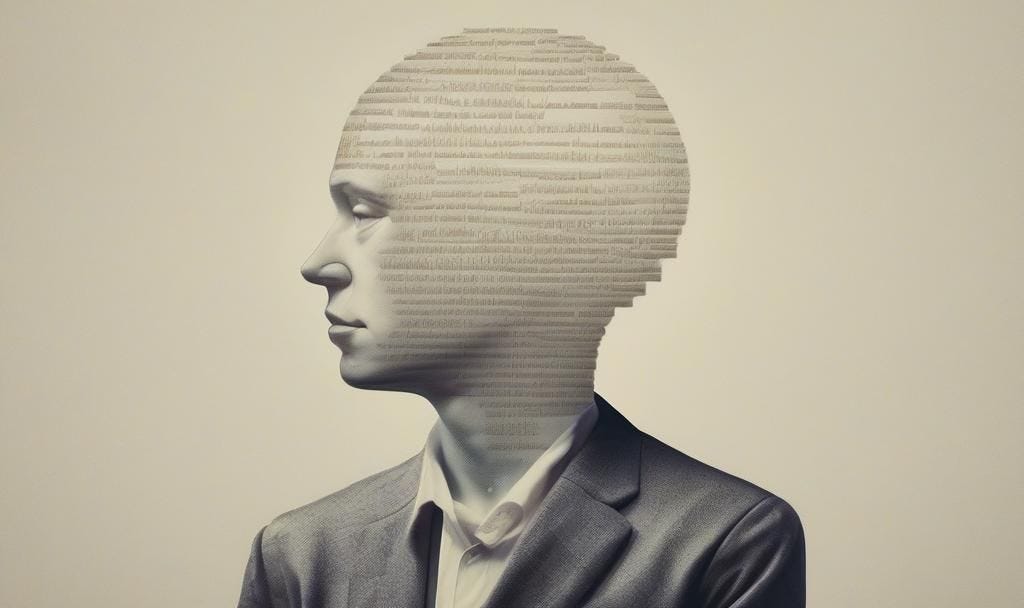
What was earlier called the New Media – modern digital technologies – are now, in very real sense, irrevocably part of human day to day living. We cannot imagine a day without the Internet. We are up in arms if the Wi-Fi is down. Most of us are ever at arm’s length with our smartphones. We simply cannot work without our laptops. It would be luddite, backward, not to admit that the New Media has wrought a lot of good. The Internet may well be the most important invention of the past century. But is the story only full of good news?
Nicolas Carr, American writer, would have us reflect a bit more. In the Atlantic July-August 2008 issue, he published an article: Is Google Making Us Stupid? While all around came flying praises for the Next Big Thing, here was someone claiming the opposite. The Internet was bringing about all these good things, but what was, what is, the price - what is the catch? Out of that article, grew his book, The Shallows: What the Internet Is Doing to Our Brains.
Many people would admit that the Internet has done a lot of harm. Perhaps chiefly in the way it has made communication so easy. Harmful content makes the majority of what is shared through the Internet. The effects are already being felt. One constantly hears outcries from concerned voices: cyberbullying, pornography and other online vices.
But this is not all. There is another layer, beneath that of the content, in which the New Media is affecting all of us. And this is the mechanism of the medium itself. This is Carr’s main message and it is borrowed from a renowned media scholar Herbert Marshal McLuhan. Carr writes, “what both enthusiast and skeptic [of New Media] miss is what McLuhan saw: that in the long run a medium’s content matters less than the medium itself in influencing how we think and act.” Typically, arguments for or against the New Media are about its content, and less about the mechanism itself in affecting us.
Carr labours to prove his point, and he succeeds. He expounds, in terms that the layman can understand, on the recent findings about the biology of our brains’ working. Our brains are plastic; they exhibit neuroplasticity. In tandem with our nervous system, the brain adjusts to repeated stimuli. Different sections of our brains run different functions and processes. The more we exercise particular function, the more our neurons rewire in order to better and more quickly achieve the given function. The Uber driver who is constantly reading maps in order to find his way will, for example, have increased growth and development of neurons in the part of the brain that takes care of analysis of images and patterns. The converse also holds, the less we perform a particular function, the less neurons our brain will dedicate to that particular function. It happens all the time, the more one omits their guitar practice the more they rust.
Carr makes the claim that the Internet is having effects on our brain through the phenomenon of neuroplasticity. And that these effects proceed from the very mechanism of its working and less from the content it passes. Carr verdict’s, which he supports with solid scientific evidence, is uncomfortable. The internet is making us shallow thinkers. The Net is wiring - or rewiring - our brain in a way that creates a mind that "wants and needs to take in and dole out information in short, disjointed, often overlapping bursts". However, what we need in order to flourish as intellectuals is a "calm, focused, undistracted and linear mind". The Net's way of working is insidious in its impact on our attention. So aptly does seizes out attention but only to scatter it so liberally among the plethora of links our brain has to evaluate on any given page.
The Net has turned us into information-processing automatons. It overloads us with stimuli making conscious, reflective and meaningful thinking difficult, if not impossible. So successful is its charm that we literally want it to capture our attention. We are ever salivating for new cognitive content to take in: a new mail, LinkedIn notification or WhatsApp message. The result is that our brain is never settled enough to do well deep and involving intellectual work, such as writing that term paper or thinking out that research proposal or tackling a new topic in the course outline.
The Net's working is a positive obstacle to solid internalisation of ideas and concepts. Our memory is composed of a working memory and a long-term memory. All the "rough-work" passes through the working memory. The resultant pieces of ideas and concepts are passed on to the long-term memory where they are integrated into schemas - networks of ideas, stored therein already. The catch is that the working memory can only process a few pieces of information at a time. In the Net we face a huge cognitive overload that prevents the working memory from focusing on a small number of important data and effectively channelling these to the long-term memory. Alas, we have become less retentive. Memorizing poetry may well become a historical curiosity.
All the while Carr juxtaposes the Net and the traditional hardcopy book. Both are human inventions. The former makes us shallow thinkers, the latter makes for deep and creative thinking. What does this mean for us scholars? Are we to dump our smart gadgets in the next bin we come across? Perhaps not. Chances are, we are already addicted and crucially dependent on them. A more viable way out is to see how we can shield ourselves from the alluring effects of the Net. It will be a question of discipline. This could be cited as weakness of Carr’s book, he identifies the problem all too clearly but fails to provide us a workable solution. Can the Net be programmed in a different way, as to change its mechanism? Perhaps yes. However, Carr does not address this possibility.
The book makes for informative reading. Its high quality prose invites and compels the reader to return to its reading. The Shallows was a finalist in the 2011 Pulitzer Prize for Non-fiction.